Exterior Painting
The Best Time of Year for Exterior Painting in New England
· By Cleiton Melquiades da Silva
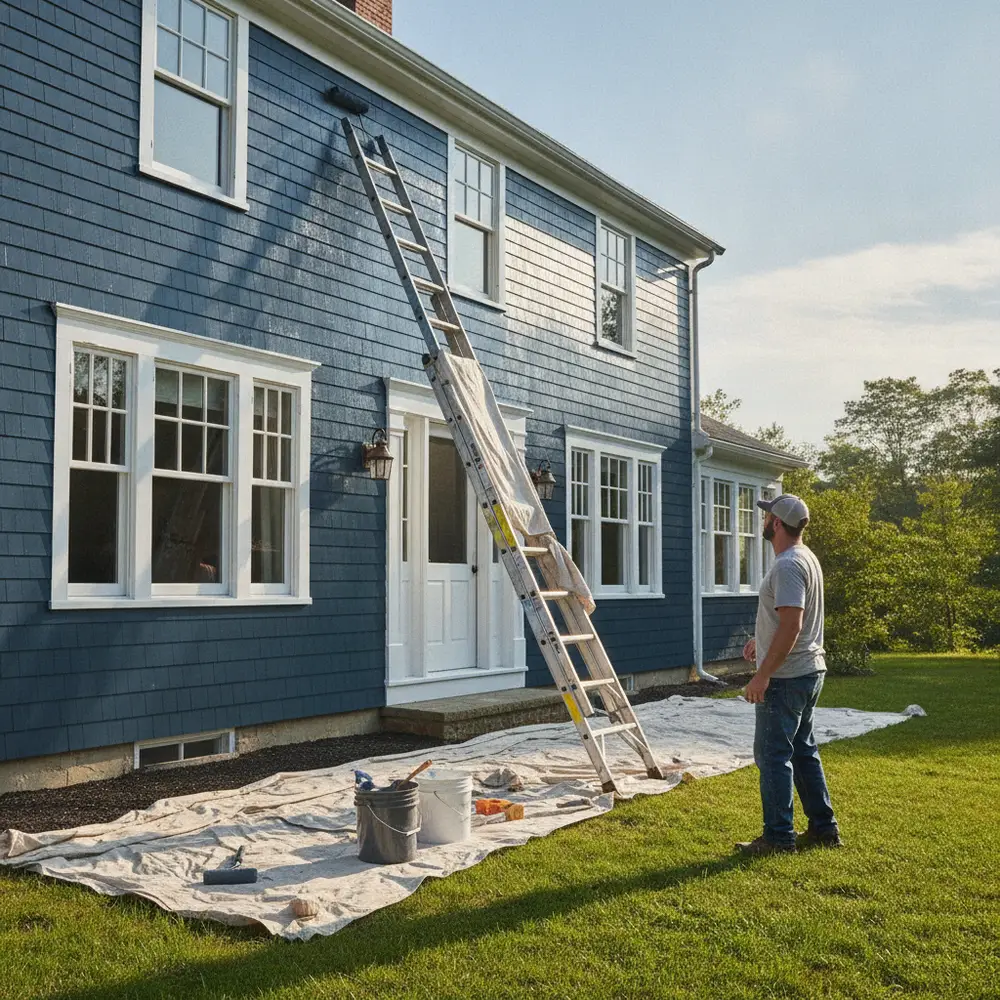
In New England, the calendar does more than mark the seasons. It decides whether your exterior paint job holds up for a decade or starts peeling in a single year. Cold snaps, humid mornings, pollen, and the first hard frost all push on wet paint while it tries to cure, and paint that cures badly fails early no matter how good the product is.
The good news is that the region gives you a reliable stretch of paint-friendly weather every year. Knowing when that window opens, when it closes, and how prep fits into it is the difference between a finish that looks sharp for years and one that never sets right. Here is how the seasons stack up and how to time the work.
Why temperature and humidity control how paint cures
Paint does not simply dry. It cures, which means the coating forms a continuous film as water or solvent leaves and the binder knits together. Temperature and humidity govern that process from start to finish, and when either sits outside the safe range, the film sets unevenly.
Most modern exterior latex paints want a surface and air temperature between roughly 50 and 85 degrees Fahrenheit, and they need that range to hold for several hours after application. Paint below the minimum can crack or fail to bond. Paint applied in high humidity dries slowly, traps moisture, and can bubble or streak.
The surface temperature matters as much as the air. A wall in direct sun can run far hotter than the reading on your phone, while a shaded north wall in early spring can stay too cold long after the afternoon feels mild. Good timing accounts for both.
The ideal window: late spring through early fall
For most New England homes, the dependable painting window runs from late May through early October. Daytime highs settle into the 60s and 70s, overnight lows stay above the danger zone, and long daylight hours give each coat time to set before evening dampness rolls in.
Inside that window, the best conditions are dry, mild days with light wind and moderate humidity. A run of clear days back to back is ideal, because it lets prep, priming, and topcoats each get their full dry time without a surprise rain shower undoing the work.
This stretch is also the busiest season for painting crews across Massachusetts and the wider region, which is exactly why booking early pays off. Locking in a date before the calendar fills means you get the weather window you want instead of whatever slot is left.
Spring: watch the moisture and the pollen
Spring can be excellent for exterior painting once the weather truly turns, but early spring in New England hides two problems. The first is lingering moisture. Siding that looks dry can still hold water from snowmelt and spring rain, and paint over damp wood peels.
The second is pollen. Late spring coats everything in a fine yellow film, and wet paint grabs it. Painting during a heavy pollen stretch can leave a gritty, dull finish that no amount of buffing fixes.
The fix is patience and prep. Wait until nighttime temperatures hold steady above 50 degrees, let surfaces dry fully after rain, and rinse the walls close to painting day so fresh pollen does not settle into the coat. Late spring, once things stabilize, is one of the strongest windows of the year.
Summer: heat, sun, and timing the day right
Summer offers the longest run of dry weather, but the heat and direct sun bring their own trap. Paint applied to a hot, sun-baked wall dries too fast on the surface before it can bond underneath, which leads to lap marks, poor adhesion, and a blotchy finish.
The move is to chase the shade. Crews follow the sun around the house, painting the east side in the afternoon after the morning sun has left it and the west side in the morning before the afternoon sun hits. Working with the shade instead of against it keeps each section cool enough to set properly.
Very hot, humid stretches in the high 80s and 90s are worth waiting out. On those days, an early morning start once any overnight dew has burned off gives the best conditions, and afternoon work is better saved for shaded walls.
Fall: the sweet spot, until the first frost
Early fall is many painters favorite time in New England. Humidity drops, the harsh summer sun softens, temperatures settle into a comfortable range, and the region often gets a long run of clear, stable days that are close to perfect for a lasting finish.
The catch is the calendar closing in. As the season moves toward late October and into November, overnight lows start dipping toward and below freezing. Once frost is a real risk after dark, fresh paint can be damaged before it fully cures, even if the daytime feels fine.
The safe play is to finish exterior work well before the first hard frosts arrive, and to keep an eye on the overnight forecast, not just the daytime high. Booking a fall slot early is smart, because the paint-friendly days run out fast once the cold sets in.
How prep fits the season, and why booking early helps
A great paint job is mostly prep, and prep is tied to the weather just as tightly as the paint itself. Washing the siding removes dirt, mildew, and pollen so the coat can grip, but the surface has to dry completely afterward, and that dry time depends entirely on temperature and humidity.
Scraping loose paint, sanding rough spots, and spot-priming bare wood all come before the topcoat, and primer needs its own cure time before anything goes over it. Rushing any of these steps to beat weather is how finishes fail. A proper schedule builds in dry time between every stage.
This is the real reason to book early. Sequencing wash, scrape, prime, and paint around clear days takes planning, and the best weeks fill up first. Reaching out ahead of the season gets your project a strong spot on the calendar and gives the crew room to time each step with the forecast instead of against it. Papito Inc offers free estimates, so an early call costs nothing and locks in your window.
Frequently asked questions
- Can you paint the exterior of a house in the rain?
- No. Exterior paint should not be applied in the rain or on wet surfaces. Moisture prevents the coating from bonding and can cause bubbling, streaking, and early peeling. Surfaces also need to be fully dry after any recent rain, which can take a day or more depending on temperature and humidity.
- What is the lowest temperature to paint outside?
- Most modern exterior latex paints need the air and surface temperature to stay above about 50 degrees Fahrenheit, both while you paint and for several hours afterward while the coat cures. Some specialty paints are rated lower, but in general, if overnight temperatures are dropping below 50, it is better to wait.
- Is fall a good time to paint the exterior of a house?
- Yes. Early fall is often the best time in New England because humidity is lower, the summer sun has softened, and temperatures are comfortable. The one caution is timing: exterior work should wrap up before the first hard frosts, since freezing overnight temperatures can damage paint that has not fully cured.
- How long does exterior paint need to dry?
- Exterior latex paint is usually dry to the touch within an hour or two and ready for a second coat in about four hours, though this depends heavily on temperature and humidity. Full curing, when the film reaches its final hardness, can take two to four weeks. Cold or humid weather slows all of these times down.
- Does humidity matter when painting outside?
- Very much. High humidity slows drying and can trap moisture in the film, leading to bubbling, poor adhesion, and a longer cure. Moderate humidity on a dry, mild day gives the best result. It is also worth avoiding painting late in the day when evening dampness or dew can settle onto a coat that has not set.
- When should I schedule an exterior painting project?
- Schedule early, ideally before the busy season fills up. The dependable painting window in New England runs from late spring through early fall, and those weeks book quickly. Reaching out ahead of time gets your project a better slot and lets the crew plan wash, prime, and paint around clear days. Papito Inc offers free estimates, so booking early costs nothing.
Related services
Serving
Found this helpful? Make Papito Inc a preferred source on Google.