Drywall Installation
Drywall vs Plaster: Which Is Right for Your Massachusetts Home?
· By Cleiton Melquiades da Silva
If you own an older home in Massachusetts, you have probably run into both drywall and plaster without knowing which is behind your paint. The two look similar once finished, but they behave very differently when you hang a shelf, patch a crack, or plan a renovation.
This guide breaks down drywall vs plaster in plain terms: what each one is, how they compare on durability, sound, cost, and repairs, and how to decide whether to restore the plaster you have or switch to drywall. The goal is a wall that fits your home, your budget, and how you actually live.
What Drywall and Plaster Actually Are
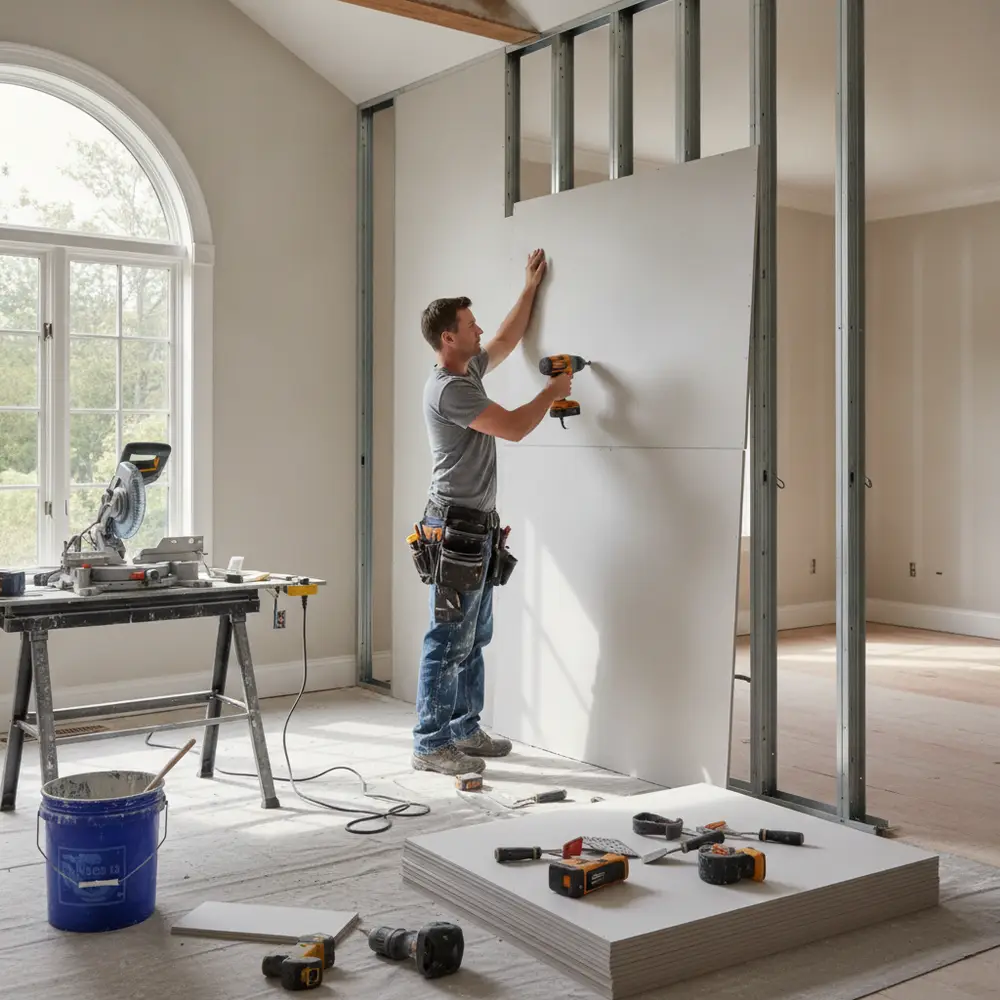
Drywall (also called sheetrock or gypsum board) is a factory-made panel of gypsum sandwiched between paper. Installers screw the panels to studs, tape the seams, and coat them with joint compound. It goes up fast and creates a flat, ready-to-paint surface.
Plaster is applied wet, in layers, by hand. In traditional homes it was troweled over thin wood strips called lath; newer plaster systems use a rock-solid gypsum board base coated with a thin veneer plaster skin. Either way, plaster cures into a dense, seamless wall with no paper face.
The short version: drywall is a panel you assemble, plaster is a coating you build up on site. That single difference explains almost everything about how they compare.
How They Differ: Durability, Sound, Cost, and Repairs
Durability and sound favor plaster. Because it is thicker and denser, plaster resists dents, dampens noise between rooms, and holds up well over decades. Drywall is softer and can ding or crack more easily, though it is perfectly durable for everyday living and easy to reinforce where needed.
Cost and speed favor drywall. Panels are inexpensive and go up quickly, so labor hours stay low. Plaster is a skilled, layered process that takes more time and hands, which is why it usually costs more per square foot to install new.
Repairs are where the trade-off gets personal. Drywall patches are quick and forgiving for most homeowners. Plaster repairs take a steadier hand to match texture and avoid cracking the surrounding surface, but a clean plaster repair blends beautifully because the wall is seamless to begin with.
Why So Many Older MA and New England Homes Have Plaster
Plaster was the standard for interior walls in the Northeast for generations. Many homes across Massachusetts, Connecticut, New Hampshire, and Maine were built well before drywall became common after the 1950s, so their original walls are lath and plaster.
That plaster is part of what gives an old New England home its solid feel: thick walls, quiet rooms, and gently imperfect surfaces that read as character rather than flaws. It is also why hanging heavy items or running new wiring behind those walls calls for a bit more care.
If your home predates the mid-century, assume plaster until proven otherwise. Knowing what you have shapes every decision about painting, patching, and remodeling.
When to Keep and Restore Plaster vs Switch to Drywall
Restore the plaster when it is mostly sound. Hairline cracks, small holes, and areas that feel firm can usually be repaired and skim coated for far less disruption than a full replacement. Keeping original plaster preserves the sound insulation, the wall thickness, and the historic character buyers often value.
Consider switching to drywall when the plaster is failing widely: large sections pulling away from the lath, sagging ceilings, or water damage across a room. In a gut renovation where walls are already open for new wiring, plumbing, or insulation, drywall is often the practical, budget-friendly choice.
Many homes end up with both, and that is fine. You can restore intact plaster in the front rooms and use drywall in a renovated kitchen or addition. If you are unsure which path fits your walls, Papito offers a free estimate and will walk your home to give you an honest recommendation.
Cost and Time Differences (What to Expect)
Every home is different, so treat these as market ranges, not quotes. For new installation, most homeowners see drywall come in lower per square foot than plaster because it is faster to hang and finish. Plaster typically ranges higher because of the added labor and cure time between coats.
Timelines follow the same pattern. A drywall room can often be hung, taped, and sanded in a matter of days. Plaster needs time for each layer to set, so the same space may take longer before it is ready for paint. Ceiling work, high ceilings, and detailed trim can extend either job.
Repairs are usually a small fraction of a full replacement, whichever wall you have. The smartest move is to price the specific work in front of you rather than the whole house. A walkthrough estimate turns these ranges into a real number for your project.
How Papito Handles Both Drywall and Plaster
Papito Inc is a family-owned contractor based in Everett, MA, with more than seven years of hands-on work in drywall, plastering, painting, carpentry, and tile across Massachusetts, Connecticut, New Hampshire, and Maine. That means we are comfortable whether your home calls for fresh drywall, plaster restoration, or a blend of the two.
We match the method to your walls instead of forcing one approach. If your original plaster is worth saving, we repair and skim it so it disappears into the existing surface. If drywall is the better fit for a remodel or addition, we hang and finish it clean and flat, then paint if you want the room finished end to end.
We are fully insured, we back our work with a satisfaction guarantee, and estimates are free. Call Papito at 781-498-8099 to schedule a walkthrough and get a clear plan for your drywall or plaster project.
Frequently asked questions
- Can you put drywall over existing plaster?
- Yes, in many cases you can install drywall directly over sound plaster, which avoids the mess of tearing the old wall out. The plaster underneath needs to be firmly attached and reasonably flat first. If large areas are loose or crumbling, removal is usually the better long-term choice.
- Is plaster better than drywall?
- Plaster is denser, so it blocks sound better and resists dents more than drywall, and it gives older homes a solid, seamless feel. Drywall is cheaper, faster to install, and simpler to patch. Neither is universally better: the right pick depends on your home, budget, and whether you are restoring or renovating.
- Which is cheaper, drywall or plaster?
- Drywall is typically cheaper to install because the panels are inexpensive and go up quickly, which keeps labor hours down. Plaster usually costs more per square foot because it is applied by hand in layers that need time to cure. For repairs, both are a small fraction of a full replacement.
- How can I tell if my walls are drywall or plaster?
- Press a thumbtack into an inconspicuous spot: it pushes into drywall easily but resists on hard plaster. You can also knock on the wall, since plaster sounds solid while drywall sounds a bit hollow between studs. Homes built before the 1950s in New England are usually plaster.
- Does drywall or plaster affect home value?
- Well-maintained walls of either type support value, while cracked or sagging surfaces can hurt it. In older homes, buyers often appreciate original plaster kept in good shape because of its character and sound insulation. Clean, professionally finished drywall in a remodeled space is equally attractive to most buyers.
- Can a plaster repair be matched to the rest of the wall?
- Yes. A skilled plasterer can patch damage and skim coat the area so the repair blends into the surrounding surface with no visible seam. Matching texture on plaster takes more care than a drywall patch, but done right the fix disappears once painted. Papito handles this kind of blending as part of our plaster work.
Related services
Serving
Found this helpful? Make Papito Inc a preferred source on Google.